Krakow shines brightest when temperatures drop. While other travelers flee to warmer climates, you’ll discover a city that embraces winter with open arms. The festive atmosphere reaches its peak during December, when twinkling lights illuminate the Old Town and the scent of mulled wine drifts through crisp air. But winter in Krakow extends far beyond the holiday season – January and February offer their own quiet charm, with fewer crowds and snow-dusted architecture creating picture-perfect scenes.
The city becomes more intimate during winter months. You can explore world-class museums without the summer crush, warm up in cosy cafes serving traditional Polish food, and experience Krakow as locals do. Winter temperatures typically hover between -5°C and 5°C, so pack accordingly and prepare for magical moments around every corner.
(Planning a visit? Check out our luggage storage in Krakow, so you can explore hands-free!)
The Christmas Market Magic
Main Market Square Christmas Fair
From November 28 through January 1, 2026, Krakow’s Main Market Square transforms into one of Europe’s most enchanting Christmas markets. The market occupies Rynek Główny (Main Square), one of the largest medieval squares in Europe, creating a festive atmosphere that draws visitors from around the world. In fact, Polish Christmas Market are getting more and more popular in recent years.
Wooden stalls line the square daily from 10:00 AM to 8:00 PM, with food vendors staying open even later into the evening. You’ll find everything from handcrafted ornaments to warming cups of mulled wine as you wander through this winter escape. The festive lights reflect off the snow, creating an almost magical winter wonderland effect that photographs beautifully at dusk.
The Christmas market in the main square offers authentic Polish experiences. Traditional wooden carvings, amber jewelry, and hand-painted ceramics make perfect souvenirs, while the aroma of grilled oscypek (smoked highland cheese) and fresh pierogi fills the air. Unlike many Western European markets, prices here remain surprisingly reasonable – making it ideal for budget-conscious travelers seeking traditional Polish craftsmanship. Although locals may consider some goods, especially food, as too expensive.
Small Market Square Christmas Fair

Starting December 1, 2025, the Mały Rynek (Small Market Square) hosts its own Christmas fair through January 1, 2026. This newer addition offers transparent pricing and focuses heavily on local producers and folk artists. If you’re looking for a slightly quieter alternative to the main market, this spot delivers authentic experiences with fewer crowds.
Plus, if you are lucky, you may experience free concerts on both of the markets.
Historic Attractions in Winter
Wawel Castle and Wawel Hill
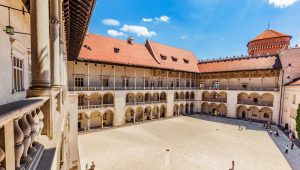
Perched above the Vistula River, Wawel Castle becomes even more dramatic when snow dusts its Renaissance architecture. The castle grounds are free to explore and open from 6:00 AM until dusk – perfect for early morning photography when fresh snow blankets the courtyards.
Inside, the State Rooms showcase 16th-century tapestries and royal portraits. Ticket prices start at 89 PLN (~21 EUR / 25 USD) for the main castle exhibitions, with reduced rates of 67 PLN (~16 EUR / 19 USD) for students and seniors. From March 1, 2026, prices increase slightly to 95 PLN (~23 EUR / 27 USD) regular and 71 PLN (~17 EUR / 20 USD) reduced. Audio guides are included with admission.
Opening hours vary by season and exhibition. During winter months, the castle is typically open Monday from 9:30 AM to 1:00 PM, and Tuesday through Sunday from 9:30 AM to 5:00 PM. The Dragon’s Den closes during winter months but the castle itself remains accessible. Monday offers free admission to selected exhibitions – you’ll need to collect a complimentary pass at the ticket office, but this represents excellent value for budget travelers.
Plan at least 3-4 hours to explore the castle properly. The combination ticket “Wawel for Enthusiasts” costs 180 PLN (~43 EUR / 50 USD), or 199 PLN (~48 EUR / 56 USD) from March 2026, and grants access to multiple exhibitions. Book tickets online at bilety.wawel.krakow.pl up to four weeks in advance to guarantee your preferred time slot.
Address: Wawel 5, 31-001 Kraków – walking distance from the Main Square!
Website: wawel.krakow.pl/en
Old Town and Market Square
The historic center of Krakow achieves UNESCO World Heritage status for good reason. Winter somehow makes the cobblestone streets and colorful townhouses even more charming when frost clings to Gothic facades. Start at Rynek Główny, the main market square, where the Cloth Hall has stood since the Renaissance era.
St. Mary’s Basilica dominates the square with its asymmetric towers. Finished in the 14th century, this Gothic masterpiece features an intricate wooden altarpiece and an hourly trumpet call (called “hejnał”) that echoes across the square. The trumpeter stops mid-melody to honor a historical trumpeter shot while warning locals of Mongol invasion – a tradition maintained year-round.
Planty Park encircles the entire Old Town, creating a scenic walking path perfect for winter strolls. The park transforms into a peaceful winter retreat when snow covers the bare trees and locals hurry past wrapped in scarves and heavy coats.

Kazimierz: The Jewish Quarter
Once a separate town, Kazimierz now forms Krakow’s most atmospheric district. This historic Jewish quarter buzzes with cafes, galleries, and restaurants serving both traditional Polish and Jewish cuisine. Winter brings a quieter, more contemplative mood to these streets where centuries of history echo from every building.
The neighborhood suffered tremendously during the liquidation of the ghetto in World War II, but today it thrives as a cultural hub. Wander the streets to discover street art, vintage shops, and intimate bars where you can warm up with Polish vodka. The area feels especially cosy in winter when you can duck into heated venues and experience local life firsthand.
World War II History
If you’re into history of World War 2, Kraków and Auschwitz are best places where you will learn first-hand about life in German-occupied city.
Oskar Schindler's Enamel Factory
This powerful museum occupies the actual factory where Oskar Schindler employed and protected over 1,000 Jewish workers during the Nazi occupation of Krakow. The permanent exhibition recreates life in Krakow from 1939 to 1945 through immersive displays that transport you to wartime streets, train stations, and even labor camp conditions.
Opening hours: Monday 10:00 AM – 2:00 PM (last entry 12:30 PM); Tuesday-Sunday 10:00 AM – 6:00 PM (last entry varies). The museum closes on the first Tuesday of each month. During winter, last entry is typically 90 minutes before closing.
Admission: 60 PLN (~14 EUR / 17 USD) regular, 45 PLN (~11 EUR / 12 USD) reduced. Free entry on Mondays, though tickets are limited and should be reserved in advance. Guided tours in English cost an additional 30 PLN (~7 EUR / 8 USD) and run at 10:00 AM, 12:00 PM, and 4:00 PM.
Plan at least 1.5 to 2 hours for your visit. The factory museum tells the story of Oskar Schindler and the occupation of Krakow with remarkable detail. Be aware that content may be intense for children under 14 years old and even for adult visitors. Book tickets online at least four days in advance through muzeumkrakowa.pl to avoid disappointment, as daily visitor numbers are strictly limited.
Address: Lipowa 4, 30-702 Kraków
Website: muzeumkrakowa.pl/en/branches/oskar-schindlers-enamel-factory
Auschwitz-Birkenau Day Trip
Located about 70 kilometers west of Krakow in Oświecim, the Auschwitz-Birkenau concentration camp memorial offers one of history’s most sobering experiences. Winter visits bring added poignancy as you walk the same paths prisoners once trudged through snow and freezing conditions.
Guided tours typically last 3.5 to 4 hours and include transportation from Krakow. Most tour operators offer pickups from your hotel or central meeting points. Tours run daily except January 1, Easter Sunday, and December 25. Admission to the memorial site is free, but guided tours provide essential historical context and cost between 150-250 PLN (~36-60 EUR / 42-70 USD) including transportation.
Dress warmly – much of the visit takes place outdoors in winter weather. Bring water and wear comfortable walking shoes as you’ll cover significant ground. This is not recommended for young children due to the intense and disturbing historical content, much more tragic than Schindler’s factory.

Wieliczka Salt Mine
Just 30 minutes from Krakow, the Wieliczka Salt Mine ranks among the world’s oldest salt mines and holds UNESCO World Heritage status. The mine maintains a constant 17°C temperature year-round, making it perfect for winter visits when you won’t shiver your way through chambers carved entirely from salt.
Operating hours: Daily from 8:00 AM to 6:00 PM. The Tourist Route runs every 30 minutes throughout the day. Closed January 1, Easter Sunday, and December 24-25.
Admission: Standard ticket 159 PLN (~38 EUR / 45 USD), reduced 129 PLN (~31 EUR / 36 USD) for students and seniors. Family tickets (2 adults + 2 children aged 4-16) cost 386 PLN (~93 EUR / 108 USD). Children under 4 enter free. Book tickets online at bilety.kopalnia.pl – this is the only official sales channel.
The guided tour descends 135 meters underground and covers approximately 3.5 kilometers of passages. You’ll see 22 chambers including underground lakes, historic mining equipment, and the breathtaking Chapel of St. Kinga – a 54-meter-long chamber carved entirely from salt and illuminated by crystal chandeliers. Many couples actually get married in this stunning underground cathedral.
Plan 2-3 hours for your visit. The tour includes descending 380 steps (there’s an elevator for the return journey). Tours are available in English and multiple other languages. Small luggage only (maximum 20x20x35 cm) is allowed underground – larger bags can be stored in automated lockers, though availability isn’t guaranteed.
Address: Daniłowicza 10, 32-020 Wieliczka
Website: wieliczka-saltmine.com
Winter Food Experiences
Traditional Polish Cuisine
This is the perfect season to discover hearty Polish food. Cold weather calls for warming dishes that have sustained Poles through harsh winters for centuries. You’ll find restaurants in Kraków serving authentic cuisine throughout the Old Town and Kazimierz districts.
Pierogi top every visitor’s must-try list – these dumplings come filled with countless variations including potato and cheese (ruskie), sauerkraut and mushroom, or meat. Order them boiled and topped with fried onions and sour cream. A generous serving costs 20-30 PLN (~5-7 EUR / 6-8 USD) at traditional restaurants.
Hunter’s stew, known as “bigos”, combines sauerkraut, fresh cabbage, multiple meats, and dried mushrooms in a dish that improves with reheating. This festive meal appears on every Christmas table and warms you from the inside out on cold winter days.
Barszcz (beetroot soup) comes in two main varieties – the clear red version served with uszka (small dumplings) makes a traditional Christmas starter, while the thicker one with cream and vegetables works perfectly as a filling winter lunch. You can also visit an Ukrainian restaurant and try “barszcz ukraiński”, which is a reacher version of this Polish dish.
Oscypek, smoked sheep cheese from the Tatra Mountains, appears at Christmas markets grilled and served with cranberry sauce – the sweet-salty combination makes an addictive street food snack. Look for it at stalls in the main market square.
Cafes and Warming Drinks
When winter temperatures drop, Krakow’s cosy cafes become essential refuges. Duck into one of the historic venues around the main market square for hot chocolate, coffee, or the ultimate winter warmer – mulled wine.
Mulled wine (grzane wino) flows also freely at Christmas markets and cafes throughout winter. The spiced, sweetened red wine costs around 30-40 PLN (~7-10 EUR / 8-11 USD) per mug and will thaw frozen fingers in minutes. Many venues add their own special spice blends creating unique flavors worth sampling. Check this ranking for best places (in Polish, but you’ll quickly figure out names of places and pricing): https://krakowfood.pl/grzaniec-krakow-grzane-wino/.
Traditional Polish vodka also warms you quickly – though perhaps too quickly. Clear vodka or żubrówka (bison grass vodka) are local favorites often served ice-cold. Sip slowly and you’ll understand why Poles have perfected the art of staying warm in harsh winters.

Day Trips from Krakow in Winter
Zakopane and the Tatra Mountains
Two hours south of Krakow lies Zakopane, Poland’s winter sports capital nestled at the base of the Tatra Mountains. This charming mountain town transforms into winter heaven when snow blankets the peaks and visitors flock to experience authentic highland culture.
You don’t need to ski to enjoy Zakopane. The town itself charms visitors with wooden architecture, highland culture, and spectacular mountain views. Stroll Krupówki Street for shopping, then warm up in traditional restaurants serving regional specialties like oscypek cheese and hearty mountain soups.
Winter activities abound in this alpine paradise. Skiing, snowboarding, sledding, and snowshoeing all thrive here during peak season from December through March. Even if you just ride the cable car up Gubałówka for panoramic views, the trip justifies the journey. Day trips from Krakow typically include transportation and a guided tour of the town, lasting a full day with departures around 8:00 AM and returns by 6:00 PM. You can also easily travel by train from Main Station – it will take about 2 hours to get there.
Thermal Baths Near Krakow
Thermal baths provide the ultimate winter indulgence – imagine soaking in steaming hot pools while surrounded by snow-covered landscapes. Several thermal complexes operate within day-trip distance of Krakow, with the most popular located near Zakopane in the Tatra Mountains region.
Popular thermal complexes include Termy Bukovina, Termy Bania, and Chochołowskie Termy. Most tours allocate 2-3 hours for soaking and relaxation before returning to Krakow. Book in advance during peak winter season, especially on weekends when both tourists and locals seek this warming escape.
These geothermal spas maintain temperatures between 32-38°C year-round, making them particularly appealing during cold winter months. Day passes typically cost 80-100 PLN (~19-24 EUR / 22-28 USD), granting access to multiple pools, saunas, and relaxation areas. Combined tours from Krakow including round-trip transportation and thermal bath entry cost 200-300 PLN (~48-72 EUR / 56-84 USD).
Check the website of Chochołowskie Termy, which are the largest and most popular in Poland: https://www.chocholowskietermy.pl/
Practical Winter Travel Tips
Getting Around Krakow
Krakow’s compact Old Town makes walking the best option for sightseeing. Most major attractions sit within 1-2 kilometers of the main market square. However, winter weather might have you seeking indoor transport occasionally.
Public transport operates efficiently year-round. Trams lines 1, 3, 8, 10, 13, and 18 connect major neighborhoods and attractions. Single tickets cost 4 PLN (~1 EUR / 1 USD) and remain valid for 20 minutes. Day tickets (40 PLN / ~9 EUR / 9 USD) make sense if you’ll take multiple journeys. Small price increase will occur from 2026 though.
Taxis and ride-sharing apps work well for reaching attractions like Schindler’s Factory or when weather turns particularly harsh. Uber and local taxi apps offer reliable service at reasonable rates – expect 20-30 PLN (~5-7 EUR / 6-8 USD) for most journeys within the city.
What to Pack for Winter
Temperatures in Krakow winter hover between -5°C and 5°C, with occasional cold snaps dropping lower. Pack in layers so you can adjust comfort levels as you move between freezing outdoor markets and overheated museums.
Essential items include:
- Warm waterproof coat (preferably down or synthetic insulation)
- Thermal base layers for particularly cold days
- Comfortable waterproof boots with good traction (cobblestones become slippery when icy)
- Warm hat, gloves, and scarf
- Umbrella for wet snow
Indoor attractions maintain comfortable temperatures, so you’ll want layers you can remove easily. Many restaurants and cafes run hot, making that heavy coat feel excessive once you’re seated with hot pierogi.
Money and Budget
Poland uses the Polish złoty (PLN), not the euro. One PLN equals approximately 0.24 EUR or 0.28 USD, though rates fluctuate. ATMs are widespread throughout Krakow, and most restaurants and shops accept credit cards.
Krakow remains remarkably affordable compared to Western European cities. Budget travelers can manage on 150-200 PLN (~36-48 EUR / 42-56 USD) daily including hostel accommodation, street food, public transport, and one museum entry. Mid-range travelers spending 400-600 PLN (~96-144 EUR / 112-168 USD) daily will enjoy restaurant meals, comfortable hotels, and multiple paid attractions.
Museum entry typically ranges from 20-80 PLN (~5-19 EUR / 6-22 USD). Many museums offer free admission on specific days – Wawel Castle on Mondays, Schindler’s Factory on Tuesdays. Plan your visit accordingly to maximize value.

Tom
Hey there! I'm from Poland and I love exploring my own country. I enjoy helping travelers discover cool spots and sharing what's worth seeing. It's great when I can offer that local insider knowledge - I'm always happy to help plan your trip and show you what makes Poland so special!